The Central European Academy of the University of Miskolc (CEA UM) successfully participated in the International scientific conference „When AI Betrays Law and Justice – Human Rights, Constitutionalism and Democratic Accountability in the Algorithmic Age” held on 16 September 2026 at Hotel Panoramika in Skopje, North Macedonia.
The conference was organised by the aculty of Law “Iustinianus Primus” of Ss. Cyril and Methodius University in Skopje, within the research project „Alignment of the Macedonian Legal System with the European Union Artificial Intelligence Legislation” funded by the Ministry of Education and Science of the Republic of North Macedonia.
Bringing together scholars, legal practitioners, policymakers and experts, the conference explored how the growing use of artificial intelligence in public governance affects human rights, democratic accountability, constitutionalism and the rule of law..
Representing the Central European Academy of the University of Miskolc, Judit Varga, senior mentor “The Quiet Handover – Algorithmic Decision-making and the Retreat of Constitutional Government.
Her central message was that the growing use of AI in public administration is not merely a technological or regulatory issue, but a constitutional one.As algorithms increasingly prepare, rank or partly automate decisions affecting individual rights, public institutions must ensure that responsibility, accountability and meaningful human judgment remain at the heart of public decision-making.
The presentation highlighted three interconnected risks: the erosion of the public character of decision-making, institutional deskillingas officials increasingly defer to algorithmic recommendations, and growing ependency on privately developed technologies and external expertise..
To address these challenges, Judit Varga presented five questions that should be asked before an algorithm shares in the exercise of public authority: whether the decision remains genuinely public; whether an accountable official can defend it; whether constitutionally significant discretion has been delegated without a clear legal basis; whether the individual concerned can meaningfully contest the decision; and whether the human decision-maker remains capable of deciding without the algorithm.
The presentation concluded with a fundamental rule-of-law challenge: as public decisions become more efficient and predictable, but potentially less human, the task is not only to control artificial intelligence, but to preserve the human capacity to judge.
A successful CEA UM team effort
The presentation was prepared with the valuable research support of three CEA UM junior researchers: Jovan Jablan from Montenegro, Szabó Erzsébet-Zsófia from Romania and Doris Skaramuca from Croatia.
Academy’s commitment to involving emerging legal scholars in cutting-edge international research and connecting a new generation of Central European researchers with major European legal debates.
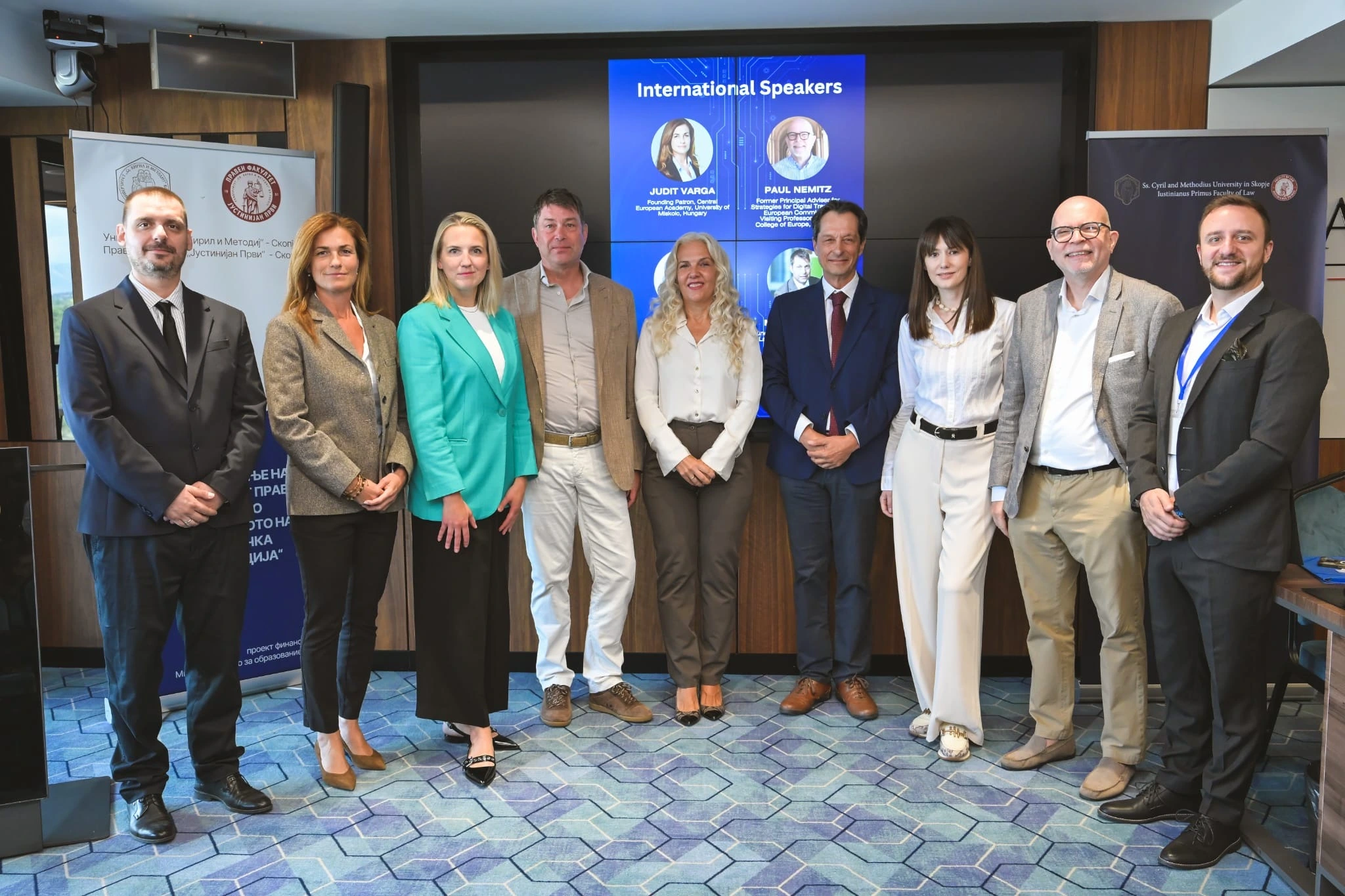
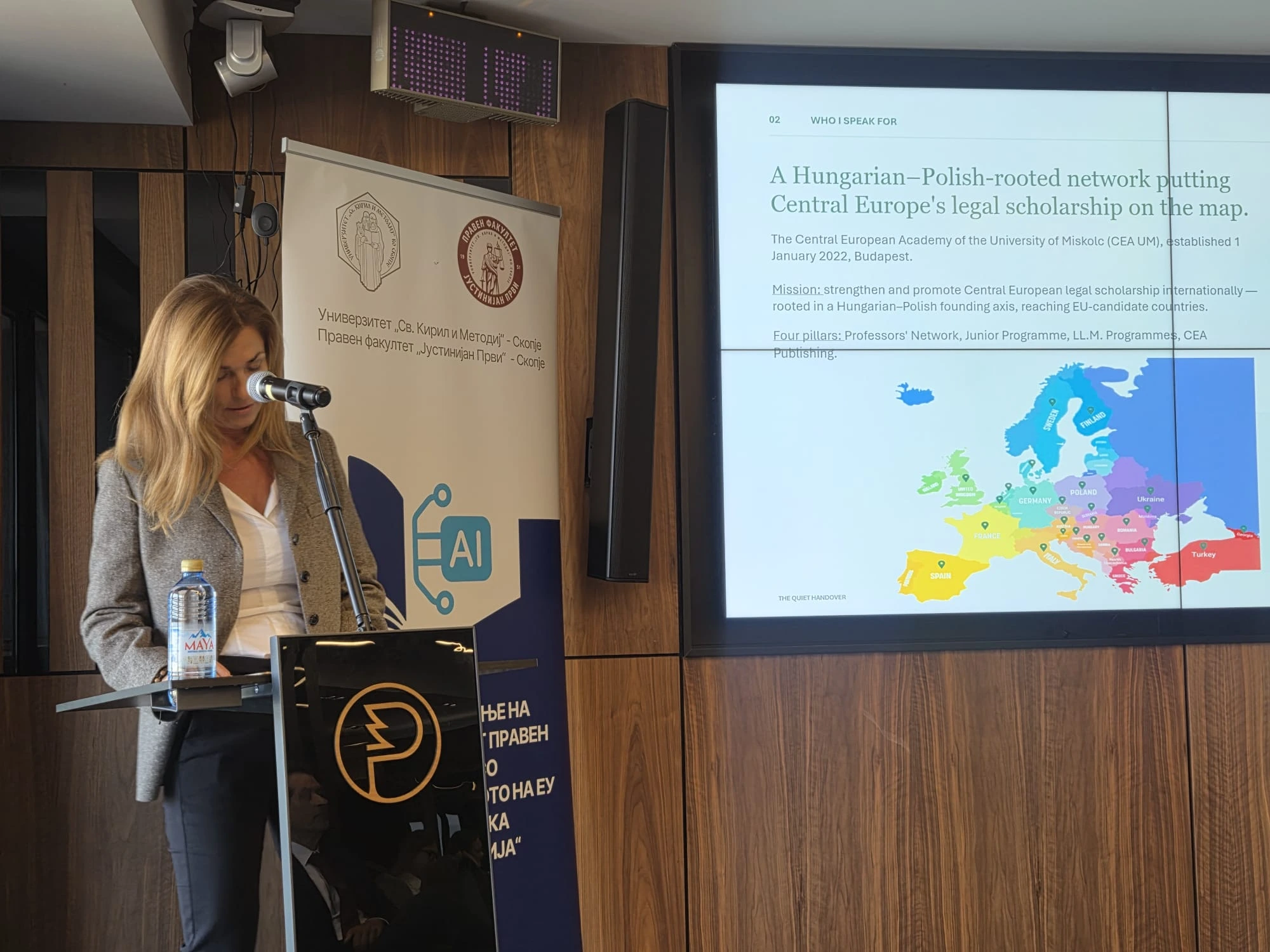
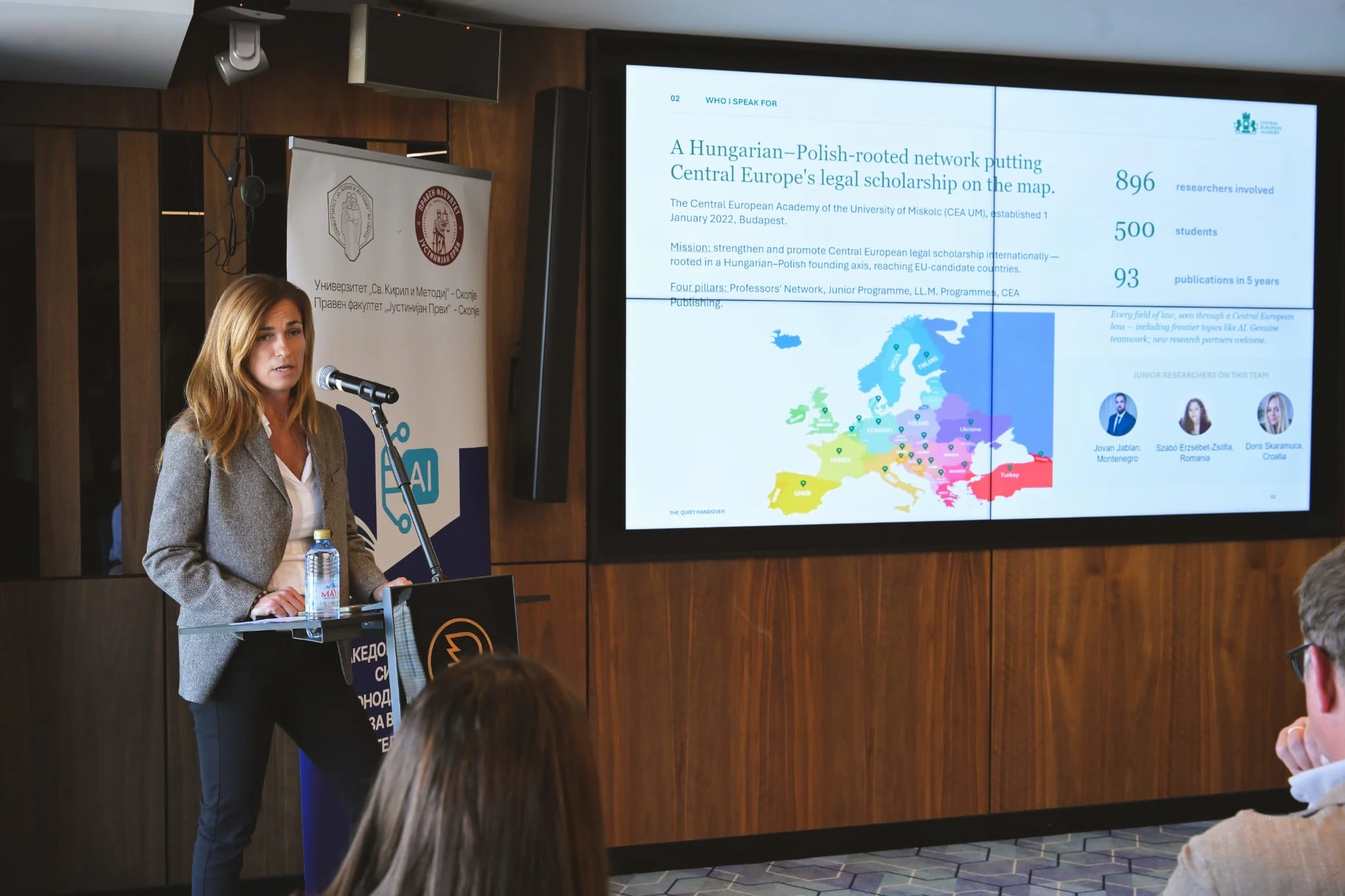
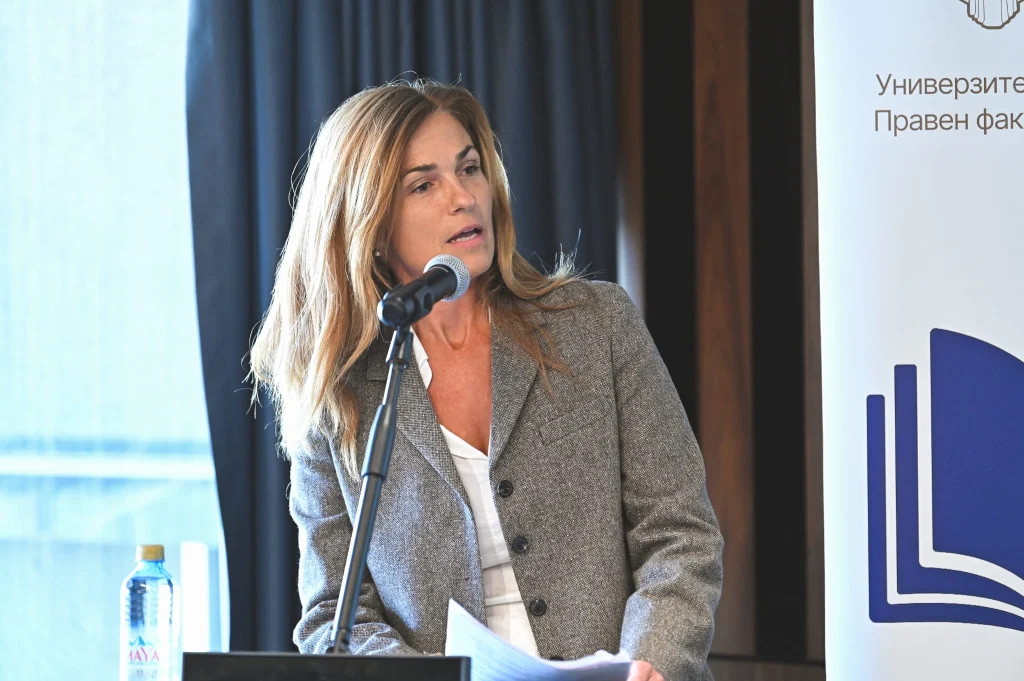
Photo: CEA UM Press